If you own a rental in Bellingham, you’re already feeling the squeeze.
Rent caps, prohibited fees, new inspection hoops… and now, compounding water and sewer increases from the City of Bellingham are now in effect.
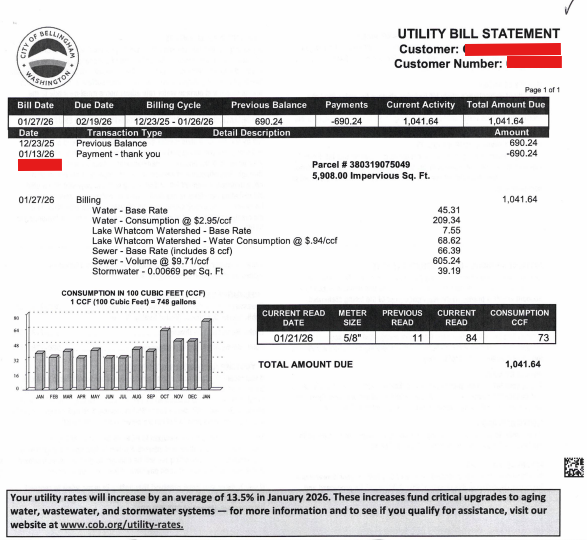
Most headlines just say, “Rates going up 9–12% per year.” That sounds bad, but vague. Let’s translate that into what it means for a normal rental and what we’re doing about it.
What’s actually changing?
The City has approved a multi‑year series of annual increases on both water and sewer rates beginning in 2026. The exact percentage depends on usage and customer class, but the city’s own projections show roughly high‑single‑digit to low‑double‑digit increases each year for the next several years.
A few key points for landlords:
These increases are on top of any normal cost inflation.
They compound. A 10% increase repeated over several years is not 10% total; it stacks.
In many rentals, water/sewer is one of the larger “invisible” line items in the budget.
In a market where rents are capped and many tenant fees are restricted, rising utilities matter a lot more than they used to.
How this shows up on your rental Profit & Loss?
Depending on how your lease is written, higher utility costs will hit you in one of three ways:
- Owner‑paid utilities
If you include water/sewer in rent, your net cash flow shrinks as those bills climb, because you can’t freely raise rent to match. - Tenant‑paid, but poorly structured
If bills are in your name and “reimbursed,” any delay, dispute, or under‑collection comes out of your pocket. - Resident‑paid and clearly structured
This is where smart lease language, clear billing, and proactive communication matter. Even then, higher utilities still affect resident affordability and renewal risk.
Most self‑managing owners never sit down and model what a few years of compounding utility increases do to their cash flow. That’s where small edges add up.
What we’re watching and adjusting for our owners
For our Bellingham owners, here’s how we’re thinking about these changes:
Lease structure: Making sure utility responsibilities are clearly assigned and enforceable within local rules.
Pricing and renewals: When we review rent at renewal, we’re looking at total housing cost, not just “rent versus the neighbor.”
Risk to cash flow: On marginal deals (thin cash flow), we’re explicitly factoring in rising utilities when we advise you on rent, terms, and whether to hold or exit.
Our job is to pay attention to the slow, boring changes that quietly erode your returns and put them on your radar early.
Want a second set of eyes on your numbers?
If you’re wondering how these water and sewer increases, rent caps, and prohibited fee rules add up for your specific property, we can walk through it with you.
We offer a simple, no‑obligation “Bellingham Rental Check” where we:
- Review your current lease language around utilities
- Map out your likely cash flow over the next few years with the new increases
- Identify easy tweaks to protect your net income
If you’d like that breakdown on your property, you can contact us through the site and mention “utility increase review.”
You can’t control City Hall. You can control how well your rental is positioned to handle it. Our promise is simple: we’re watching this stuff so you don’t have to.